







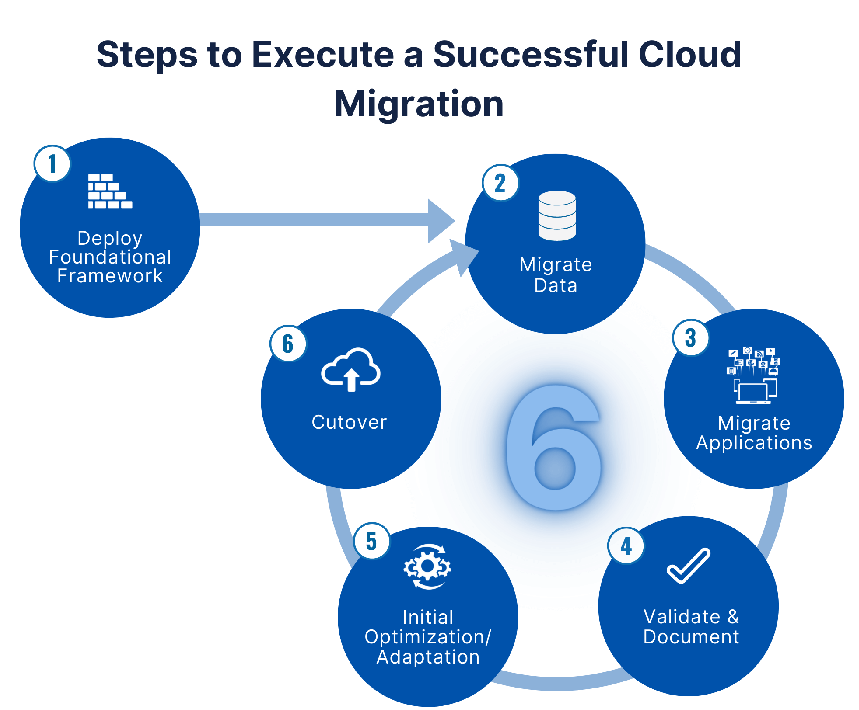
In today’s digital-first world, moving to the cloud is no longer a question of if it’s a question of how. Organizations that rush into cloud adoption without a clear Cloud Migration Strategy often face unexpected costs, security gaps, and operational disruptions. On the other hand, businesses that approach migration with a structured plan unlock agility, scalability, and long-term competitive advantage.
This guide breaks down what a successful cloud migration strategy looks like and how you can build one that aligns technology with business goals.
What Is a Cloud Migration Strategy?
A Cloud Migration Strategy is a comprehensive roadmap that defines how an organization moves its applications, data, and workloads from on-premises infrastructure to the cloud—or between cloud environments. It goes beyond simple data transfer and addresses architecture, security, compliance, performance, and cost optimization.
Without a strategy, cloud migration becomes a reactive process. With one, it becomes a transformation.
Why a Cloud Migration Strategy Is Critical
Cloud migration is not just a technical shift—it’s an organizational change. A strong strategy helps you:
- Reduce risk by identifying dependencies and potential downtime early
- Control costs through proper workload sizing and optimization
- Improve security and compliance with clear governance models
- Increase agility by enabling faster deployment and innovation
- Maximize ROI from cloud investments
In short, a thoughtful cloud migration strategy ensures you move with purpose, not pressure.
Key Components of an Effective Cloud Migration Strategy
1. Business Objectives First
Every migration should start with clear business outcomes. Are you aiming to reduce infrastructure costs? Improve scalability? Enhance disaster recovery? Your cloud migration strategy should directly support these goals.
2. Application and Infrastructure Assessment
Not all workloads are cloud-ready. Assess applications based on complexity, performance requirements, and dependencies. This step helps determine which workloads to migrate, modernize, or retire.
3. Choosing the Right Migration Approach
Most strategies fall into common migration patterns, often referred to as the “6 Rs”:
- Rehost (lift and shift)
- Refactor
- Revise
- Rebuild
- Replace
- Retire
Selecting the right approach for each workload is key to avoiding unnecessary rework.
4. Security and Compliance by Design
Security should never be an afterthought. A mature cloud migration strategy includes identity management, data encryption, access controls, and compliance requirements from day one.
5. Phased Execution and Testing
Successful migrations happen in phases—not all at once. Pilot migrations, continuous testing, and performance validation reduce risk and ensure business continuity.
6. Optimization and Continuous Improvement
Migration doesn’t end once workloads are in the cloud. Ongoing cost optimization, performance tuning, and governance ensure long-term success.
Common Cloud Migration Mistakes to Avoid
- Migrating everything without prioritization
- Underestimating application dependencies
- Ignoring post-migration optimization
- Failing to train teams on cloud operations
- Treating cloud migration as a one-time project
Avoiding these pitfalls is just as important as following best practices.
Conclusion
Organizations that invest time in designing a robust cloud migration strategy don’t just move infrastructure—they transform how they operate. They gain faster time to market, improved resilience, and the flexibility to adapt to future demands.
Whether you’re planning your first migration or optimizing an existing cloud environment, the right strategy is the difference between short-term gains and long-term success.















+ There are no comments
Add yours